Get ready to learn about the three major methods of laser distance measuring and their applications. Discover the advantages and disadvantages of triangulation, time-of-flight, and phase difference methods and how they can be used in industrial and commercial settings.
Laser distance measurement is a widely used technology in our daily life, and there are three major methods employed: Triangulation, Time-Of-flight (TOF), and Phase Difference.
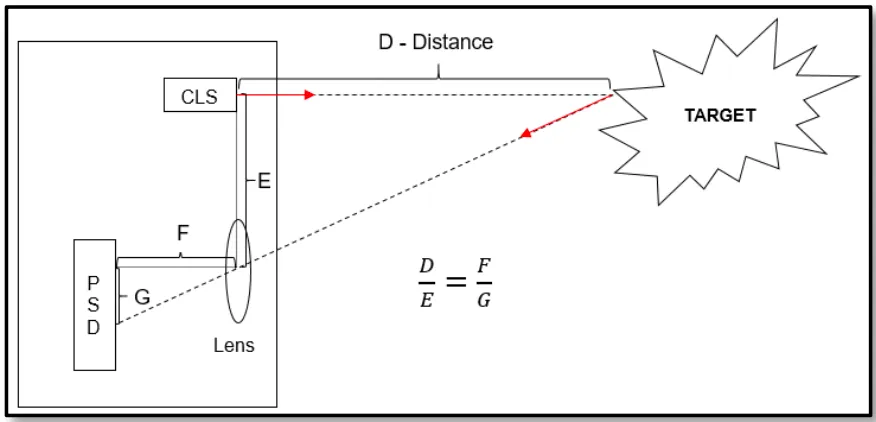
Triangulation is commonly used in factory automation and vacuum robots, where high accuracy is required for short-range measurements. With a resolution of 0.1mm, triangulation provides precise measurements, but is sensitive to ambient light and can be affected in brighter or longer-range scenarios.
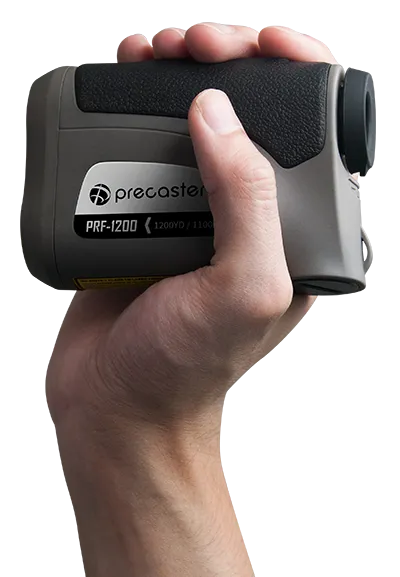
Time-Of-flight (TOF) provides long-range measurement capabilities, with an accuracy of up to meter level. This method is commonly used in golf rangefinders, where distances are measured up to the kilometer level.
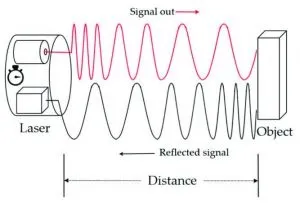
Phase Difference provides a mid-range measurement solution, with millimeter accuracy. Although it is slightly sensitive to ambient light, it is less affected than the triangulation method. This method is the basis for all laser distance measurements, as the distance measurement is determined by the phase difference between the emitted and received laser signals.

Each of these methods has its own strengths and limitations, and the choice of which to use will depend on the specific measurement requirements and conditions of the application. We will dig into each method in the coming blog.
If you have any questions or plans for laser distance measuring, we specialize in advanced laser distance and angle measuring modules for industrial and commercial applications. Please contact us at contact@precaster.com.tw. We will be happy to hear from you.